You get the promotion. Your wife hugs you. Your kids cheer. And somewhere between the congratulations and the cake, a strange weight settles on your chest that you didn’t expect and can’t explain. You smile because that’s what the moment requires. But inside, something is bracing, waiting, scanning for the catch.
Maybe you’ve noticed this pattern before. A birthday feels more like an endurance test than a party. An anniversary dinner leaves you feeling hollow instead of grateful. Your son scores the winning goal and you’re proud, genuinely proud, but there’s a part of you standing back from the joy like a man watching the celebration through a window.
If good news regularly feels heavy, if celebration triggers something closer to anxiety than delight, your story may be shaping your capacity to receive what’s actually in front of you.
Why Your Body Doesn’t Trust Good Things
For a man who grew up in an unpredictable environment, good moments were not trustworthy. They were setups. A good day at home might have been followed by an explosion at dinner. A moment of closeness with a parent might have been followed by withdrawal or punishment. The nervous system of a boy in that kind of environment learns a devastating lesson: joy is the precursor to pain.
So the adult man walks through life with an invisible guardrail around celebration. He can observe good things happening. He can know, cognitively, that this moment is safe and real. But his body won’t let him all the way in, because the last time he let his guard down during a good moment, something terrible came next.
This is not pessimism. It’s protection. And it was brilliant when you were eight. It just isn’t serving you anymore.
The Man Who Watches From the Edge
You might recognize yourself in one of these patterns.
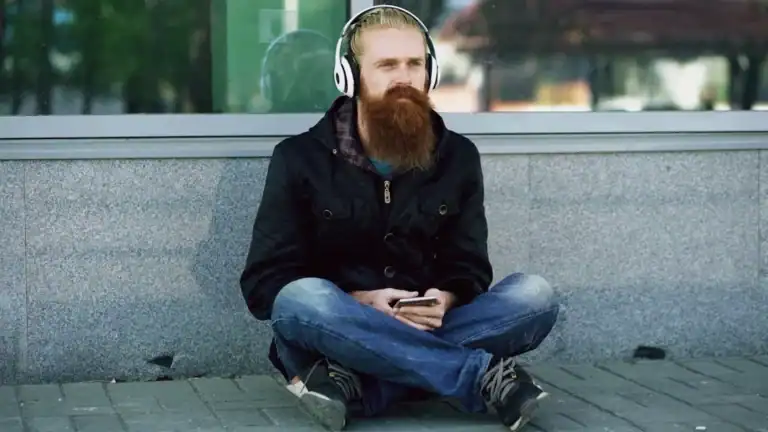
The first is the spectator. You show up to the celebration, but you hover at the edges. You let your wife handle the joy while you manage the logistics. You’re the one cleaning up while everyone else is laughing, not because you love cleaning but because movement keeps you from having to feel.
The second is the deflector. Someone compliments you and you immediately redirect. “It was nothing.” “The team did all the work.” “I just got lucky.” Not humility. Not really. More like an instinct that says receiving good things makes you vulnerable, and vulnerability is something you learned to avoid a long time ago.
The third is the saboteur. This one is harder to admit. Something good arrives and you find a way to ruin it. You pick a fight on the way to the party. You drink too much at the reception. You withdraw right when your wife is trying to connect. It’s as if some part of you needs to get the pain over with quickly rather than wait for it to arrive on its own.
“You have turned my mourning into joyful dancing. You have taken away my clothes of mourning and clothed me with joy, that I might sing praises to you and not be silent.”
Psalm 30:11-12 (NLT)
The psalmist describes a turning, not from sadness to happiness, but from mourning into dancing. For a man who has spent years bracing against good things, that turning might not happen all at once. It might begin as a trembling willingness to stay in the room when joy shows up, rather than looking for the exit.
What Celebration Asks of a Man
Celebration asks you to be present. It asks you to receive. It asks you to drop the vigilance for a moment and trust that this good thing is not a trap.
For a man whose body learned that good things are traps, that’s one of the bravest things he’ll ever do.
It might help to name what’s happening in real time. The next time you notice yourself pulling back from a good moment, try saying to yourself, even silently: “My body is bracing for something that isn’t here right now. This moment is what it appears to be.”
You might also begin to grieve the celebrations you couldn’t receive as a boy. The birthday parties that were overshadowed by chaos. The achievements that no one noticed, or noticed only to use against you later. That grief is not self-pity. It’s honesty. And it creates space for something new to grow.
You might tell your wife what happens inside you during celebrations. Not to dampen the moment, but to invite her into the real version of you rather than the performing version. “I want to be here with you. My body is making it hard right now, but I’m trying.” That kind of honesty does more for intimacy than a dozen roses.
Learning to Stay in the Room
Perhaps the deepest work is not learning to celebrate, but learning to stay. To stay in the moment when joy arrives. To stay present when your body wants to bolt. To stay connected to the people who are trying to love you, even when receiving love feels like the riskiest thing you’ve done all week.
You were made for more than watching your own life from the sidelines. The man who can learn to receive a good thing without bracing for the blow that follows, that man is not naive. He is courageous. And he is doing something his younger self never had the chance to do: letting joy land.
For Further Reflection
- What happens in your body when something genuinely good arrives? Do you notice yourself bracing, deflecting, or pulling back?
- Is there a celebration from your past that you wish you could have actually been present for? What got in the way?
- What would it cost you to stay fully in the next good moment, without looking for the catch?
If something here named what you’ve been carrying, story coaching might be the next step. Visit reclaimingshalom.com to learn more.