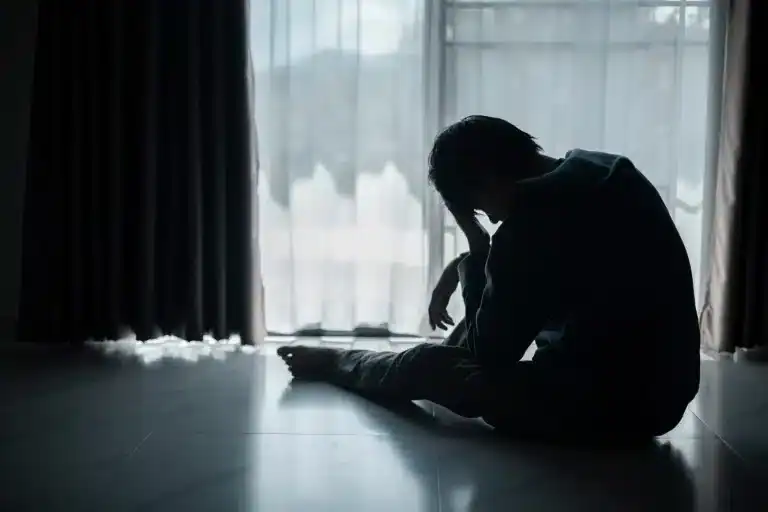
You pick up the guitar and something shifts before your fingers even touch the strings. Your jaw tightens. Your breathing gets shallow. The thing that was supposed to be enjoyable suddenly feels like a test you’re about to fail.
Maybe a lesson with a patient teacher still makes your hands shake. Maybe you practice alone because the idea of anyone hearing you make a mistake is unbearable. Maybe you quit playing years ago and told yourself you just lost interest, when the truth is something about music started to hurt in a way you couldn’t name.
If picking up an instrument activates something that feels more like dread than discipline, your body may be replaying a story that has nothing to do with the music itself.
When Someone Turned Music Into a Weapon
Many men who struggle with music practice can trace it back to a specific relationship. A parent who demanded perfection and punished anything less. A teacher who used humiliation as motivation. A worship leader who made spiritual performance and musical performance the same thing.
In those environments, practice was never about growth. It was about avoiding consequences. The goal wasn’t to play well. The goal was to play well enough that no one got angry, disappointed, or threatening. Your body learned that the instrument was not a source of joy but a minefield, and every wrong note was a potential detonation.
Even if you’re now playing for yourself, in your living room, with no one listening, your nervous system may still be operating under the old rules. Because the threat wasn’t really the wrong note. The threat was the person who responded to the wrong note, and your body hasn’t forgotten what that response felt like.
What Perfectionism Is Actually Protecting
When a man can’t tolerate his own mistakes during practice, it usually has very little to do with standards and everything to do with safety.
Perfectionism in music is often a trauma response wearing a respectable mask. It looks like discipline. It sounds like high standards. But underneath, it’s the old equation: mistakes equal punishment. And the man who practices the same passage forty times isn’t being diligent. He’s trying to make the music safe enough that the boy inside him can finally relax.
That boy never relaxes, of course. Because the standard was never actually about the music. It was about controlling an uncontrollable environment, and no amount of perfect playing can heal the wound underneath the compulsion.
“He has given me a new song to sing, a hymn of praise to our God.”
Psalm 40:3 (NLT)
A new song. Not a perfect one. Not a flawless performance. A new one, which means it will be unfamiliar, tentative, maybe even rough at first. The God who gives new songs is not the conductor who demands perfection. He is the one who invites you to play something you’ve never played before, mistakes and all.
Learning to Play Again
You might start by redefining what practice means. Not repetition for the sake of mastery, but exploration for the sake of connection. What happens if you sit with the instrument and play whatever comes, with no agenda, no standard, no audience?
You might notice that your body resists this. It might feel indulgent or pointless. That resistance is information. It tells you how deeply the idea of “purposeless play” was removed from your experience of music. And it invites you to put it back.
You might also experiment with the physical space. If you practiced in a room where someone listened with judgment, change the room. Play outside. Play in the truck. Play somewhere your body has no file on, no memory to contend with.
If the shame runs deep, if practice consistently triggers anxiety or shutdown, working with a story coach who understands how trauma lives in the body can open pathways that willpower alone cannot. The instrument in your hands is not the problem. The hands that once held power over you while you played are the story that needs attention.
The Music That Is Yours
Somewhere beneath the perfectionism and the performance anxiety and the dread, there is a man who loves music. He loved it before someone made it dangerous, and he might be able to love it again, if he can separate the sound from the story.
That separation is holy work. It’s the work of reclaiming something that was taken, not by throwing away the instrument, but by picking it up again with gentler hands.
For Further Reflection
- What happens in your body when you pick up an instrument or sit down to practice? Is there tension that arrives before you even begin?
- Can you identify a specific person or season that changed your relationship with music from enjoyment to obligation or dread?
- What would it feel like to play something badly on purpose, with no one listening, and let it be enough?
If something here named what you’ve been carrying, story coaching might be the next step. Visit reclaimingshalom.com to learn more.